Bcharre بشرّي
Yousef Taouk and Tom Kinsella on Lebanese folk samples, Brisbane studio hardware, and why a single fan paying you directly is worth more than ten thousand streams.
Lincoln Savage
4 min read
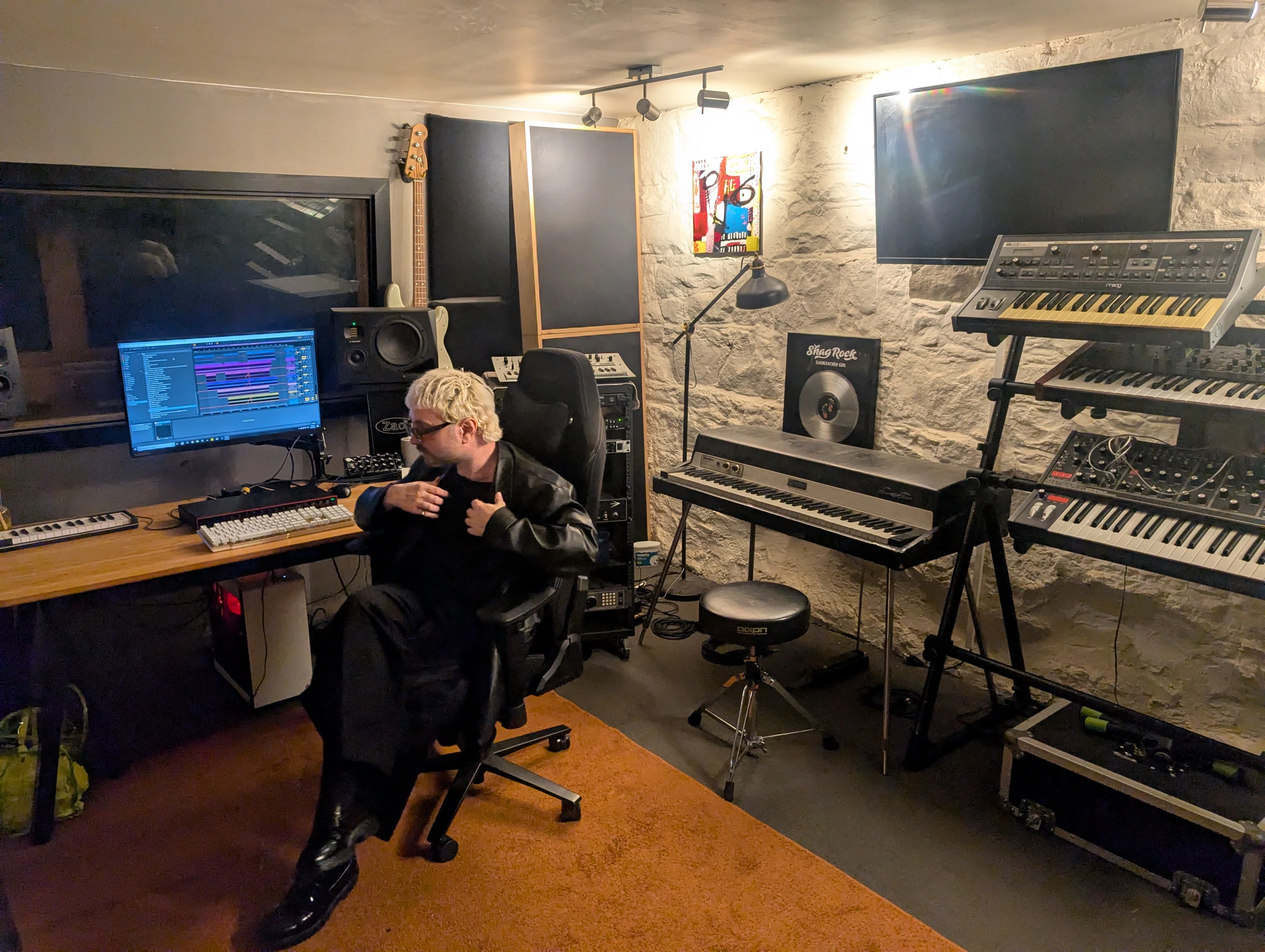
Bcharre’s studio is in the oldest building on a rapidly developing street in inner Brisbane. Two synth rigs face each other across a desk, hardware stacked behind, drum machines and a sampler within arm’s reach. Yousef Taouk works here often. Tom Kinsella, the other half of the duo, comes in for sessions and live prep.
Bcharre is an electronic duo. Yousef calls it “a soundscape and electronic duo” on the record, and won’t pin a sub-genre when asked. The closest he gets is “electronic music with an emphasis on storytelling and Middle Eastern folk music.”
The instruments at the centre of the work are the doumbek, the oud, the mizwij. None arrive in the final mix as themselves. They are sampled, chopped, transposed, run through the analog rig, and reshaped into something the listener feels rather than identifies. “It sounds almost robotic but has that feeling,” Yousef says. “And evokes the idea of, hey, I can see the story you’re trying to tell.”
Everything tracks back to percussion. He puts it like this:
Everything started with percussion. The core idea behind Bcharre is take something that’s so ancient and so intrinsically human, rhythm, drums, and try and bring it into the future. This is how we started telling stories when we were cave people, banging on animal skin and telling people don’t come here, or come here, come be a part of our village, stay away.
Bcharre is also a place. It is the village in northern Lebanon, in the Cedars region, where Yousef’s family is from. His father, Malik Taouk, is a poet. Most Bcharre records have no lyrics, but most have a poem attached. Sometimes from his father, sometimes from Yousef, posted in the captions of a release, included in liner notes, or kept off the public versions.
We asked why a project rooted in Lebanese folk and family poetry plays out on a dance floor.
Celebration is important. Being a country and a people who have had wars for hundreds of years, who have been occupied, who have been stomped down, but still are able to celebrate weddings, celebrate freedom, just to be able to dance. The idea behind the name and bringing the culture in, linked with celebrating, having a good time, it’s all about freedom. Being able to be yourself, no matter who you are.
Yousef came up as a jazz drummer, trained at the Sydney Conservatorium, and learned production from a producer in Sydney. “I was never taught, this is how you use compression. I’m just going to do this by my ear. If it feels good, it feels good.”
Live, Bcharre is two people, Yousef and Tom, with a mostly analog rig. A show is months of preparation. “It’s not like just plugging a guitar in and strumming out chords,” Yousef says. “A live electronic show is a lot of work. Especially the way that we do it.” On whether audiences follow what they’re doing: “Do people know what we’re doing? Probably not. Do we know what we’re doing? Yeah, and we love it.”
He is a shy person, and releasing music is hard. “There’s always this sense of, do I put this out? Will anybody care? Does it even matter?” He says he has to remind himself the answer is yes.
We asked him about the streaming economy.
You can have 10,000 streams a month and you still make nothing. That’s okay, because you can go to a show, watch the band play, and that’s where you really fall in love with the artists.
He chose not to name the major streaming services in the interview. “I don’t want to give them any money. They’re evil.” On Distrosub, where Bcharre publishes, he said: “It is a streaming platform that puts the artist first. You choose who you want to listen to. You don’t have to pay a lot of money at all. And you’re picking those artists that you truly love and appreciate.”
The latest Bcharre release is Song for Tata. “They’re the bringers of life. It’s my ode to my grandmother and my mother.” Yousef recommends it as the entry point.
The last words of the interview were these:
Peace in the Middle East. That’s all we ask for. Support live music.
Comments (0)