Sellma Soul
Sellma on performance and autonomy. Art is meant to be about creative freedom, but what happens when the industry is deviating from that dream?
Kylie Mangili
5 min read
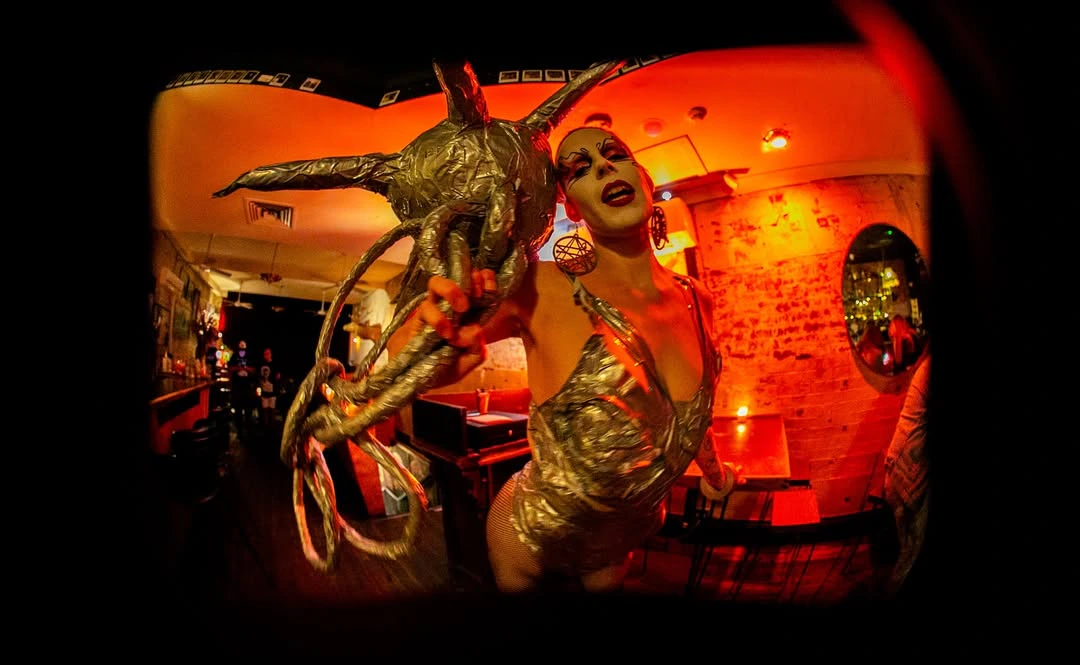
Sellma Soul has been commanding the stages of Meanjin for thirteen years. A drag performer, recording artist, and creative resident at Superordinary, she has built a reputation on refusing to be contained - by genre, by expectation, or by anyone else's idea of what she should be. Sitting down with her, that same energy fills the room. Her love for the arts is eclectic, and her commitment to delivering audiences something they will not forget runs through everything she does.
Her singles, from '400 Ft Woman' onward, range from rage pop to melodic synth waves, all exploring avenues of identity and authenticity. Her resident workspace at Superordinary reflects the same trajectory, shaped by years of work as a prolific drag artist.
Brisbane/Meanjin has long known her through the city's drag circuit, Cloudland, Fluffy's, the Wickham: stages that have shaped queer nightlife in the city. In 2019, the rest of Australia got a look when Sellma appeared as a contestant on The Voice.
"It was more of a thing to go and have fun, and perform, and send a positive message"
— Sellma Soul I Full Interview for 'The Tape'
For many Australian viewers, her presence on prime-time television registered as a milestone, an openly queer performer on a mainstream national platform at a moment when LGBTQ+ artists were only just beginning to break through internationally, with names like Girl in Red, King Princess, and Lil Nas X leading the charge. Sellma is grateful for the opportunity, but she is also aware of the narrative that surrounded it.
“What did the gay guy sing? Lady Gaga? Surprise, surprise!”
She says it with a laugh, but the point underneath it is serious. Being seen matters. Being flattened into a symbol is something else. Sellma would ultimately be voted off the show and from her perspective, her refusal to be categorised played a direct role in that outcome.
"“You can only have so much control when you are letting other people tell your story or represent you, especially when you don’t even know yourself as fully as you think you do.”"
— Sellma Soul I Full Interview for 'The Tape'
In 2020 Sellma began her transition, a turning point that sharpened her drive to express herself authentically, and music became the vehicle. A connection from The Voice opened the door to giving her the chance to record her own album: a chance to write her own narrative, on her own terms. Where the drive to be a queer public figure on television was lead by the acknowledgement of the importance of representation, this opportunity to write her own music was a time to have control over who she was. But the industry had other ideas.
As she explains to us, management pushed charts, trends, and profitability over creative freedom, and the revenue that followed barely reflected her cultural weight as a performer. Five years of releasing music. Five years of streaming and listeners and songs that found their audience. The return in royalties: $80. What Sellma calls “drip feeds.” It is a number that exposes one of the bluntest contradictions in the modern music industry that the freedom to make art entirely on your own terms can come at the direct expense of being able to sustain yourself through it. For independent artists, the promise of the streaming era has largely not delivered. The platforms are vast. The visibility can be real. But the economics, for artists without the weight of a major label behind them, remain punishing.
The answer, for Sellma, came through her network at Superordinary. She was introduced to Distrosub, a new independent streaming platform built around artist autonomy, by its founder, Lincoln Savage. As one of the platform’s earliest and most vocal supporters, she is not shy about what she thinks it represents.
“…the more artists that get on board, the more powerful it will become, because I think it is now about gussying up and empowering artists to leave these platforms that promise us literally nothing.”
Autonomy is the word that keeps coming back. The freedom to create without compromise, to be paid in a way that reflects the actual value of the work. It’s what Sellma has been fighting for across every stage of her career, on national television, in the recording studio, and now through a platform built on the premise that independent artists deserve better.
Distrosub presents itself as a chance to produce and release music not only at her own time, but with full autonomy. Instead of a producer or manager deciding the trajectory of her sound, she gets to decide by herself and in her own time. It feels silly to say that as if it’s ground breaking, but in this day and age of music it’s no surprising independent artists are feeling strangled by the growing standards and restrictions in the industry.
Distrosub welcomes new artists every week. Sellma has been the strongest supporter, and represents the turning tide of artists looking for an alternative that stands for what they truly need: creative freedom and real support. Sellma gives us a very clear conclusion:
"I die or you listen to Distrosub"
— Sellma Soul I Full Interview for 'The Tape'
Or, as she puts it in the second take:
"“Every time you stream a song, I feel it. I get paid. I feel loved.”"
— Sellma Soul I Full Interview for 'The Tape'
Comments (0)